
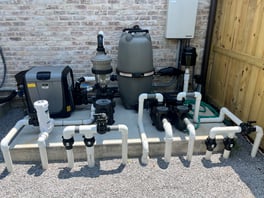
 Your pool pump and filter work together every day to circulate water, remove debris, and support proper water quality. When either one starts losing efficiency, the first signs may be subtle. You may notice weaker return flow, changes in filter pressure, unusual noises, or water that no longer stays as clear as it normally does.
Routine pool pump and filter maintenance can help catch these changes before they develop into larger equipment problems. Knowing what to watch for can also help you determine when basic maintenance is enough and when your equipment needs professional attention.
Why Are Your Pool Pump and Filter So Important?
Your pool pump moves water through the circulation system, while the filter removes dirt, debris, and other contaminants before the water returns to the pool. Together, they keep water moving and support the rest of your pool maintenance routine.
When circulation becomes restricted or filtration performance declines, problems can begin appearing elsewhere. Water may become cloudy, chemicals may not circulate evenly, debris may collect more quickly, and other pool equipment may have to work harder.
That is why changes in pump or filter performance are worth noticing, even when the pool still looks relatively clean.
What Are the Signs Your Pool Pump Needs Attention?
A pool pump should operate consistently without major changes in noise, water flow, or performance. When something changes, it may be an early sign that the pump or another part of the circulation system needs maintenance.
Signs to watch for include:
- Grinding, rattling, humming, or other unusual noises
- Reduced water flow from the pool returns
- Air collecting in the pump basket
- Difficulty getting the pump to prime
- Water leaking around the pump
- The pump turning off unexpectedly
- The pump running but appearing to move very little water
Some issues may be caused by something relatively simple, such as a full pump basket or debris restricting water flow. Others can indicate worn components, air entering the system, plumbing problems, or an issue inside the pump itself.
If routine cleaning doesn't fix the problem, Lucas Firmin Pools can inspect the pump and circulation system to determine the cause before additional damage occurs.
Why Is My Pool Pump Losing Pressure or Water Flow?
Reduced circulation can happen for several reasons, and the pump itself is not always the source of the problem.
A clogged skimmer basket, dirty filter, obstructed line, low water level, air leak, or debris inside the system can all affect how efficiently water moves through the pool. This is why diagnosing circulation problems often involves looking at the entire system rather than replacing or repairing the pump immediately.
Watch for changes in the strength of the water returning to the pool. If return flow remains noticeably weaker after you empty the baskets and complete routine maintenance, the system may need closer inspection.
Consistent circulation is also closely connected to proper water chemistry, since pool chemicals need to circulate throughout the water to work effectively.
What Are the Signs Your Pool Filter Needs Attention?
Your filter collects debris and contaminants as water passes through the system. As that material builds up, the filter requires cleaning or other routine maintenance to continue operating efficiently.
Signs that your filter may need attention include:
- Cloudy water that persists despite proper chemical balance
- Reduced water flow
- Higher-than-normal filter pressure
- Debris returning to the pool
- Leaks around the filter
- Frequent need for cleaning or backwashing
- Visible damage to the filter housing or components
A dirty filter does not always mean something is broken. Depending on the filter type, cleaning, replacing the filter media, or backwashing may restore normal performance.
If the same symptoms return shortly after maintenance, however, another issue may be affecting the filtration system.
How Often Should a Pool Filter Be Cleaned?
No single cleaning schedule works for every pool. The type of filter, pool size, surrounding landscape, weather, swimmer activity, and debris entering the water can all affect how quickly a filter gets dirty.
Louisiana pools can experience particularly demanding conditions because of heat, rainfall, pollen, leaves, storms, and long swimming seasons. Hot Louisiana weather can also increase overall maintenance demands during the summer.
Instead of relying only on a calendar, monitor your filter pressure, water flow, and water clarity. Changes in those areas can help indicate when the filtration system needs attention.
Regular weekly pool maintenance also allows you to monitor equipment performance before a noticeable problem develops.
Can a Dirty Filter Affect Your Pool Pump?
Yes. Your pump and filter operate as part of the same circulation system, so a problem with one can affect the other.
When a filter becomes heavily restricted, water may have more difficulty moving through the system. That can reduce circulation and place additional strain on equipment over time. Similarly, a pump that doesn't move enough water can prevent the filter from operating as intended.
Keeping baskets clean, maintaining the filter, and monitoring circulation all help the system operate more efficiently. Inconsistent pool maintenance can let small circulation and filtration issues build until you need more extensive service.
When Does a Pool Pump or Filter Need Professional Service?
Basic tasks such as emptying baskets, monitoring pressure, and performing routine filter maintenance are part of pool ownership. Persistent equipment problems are different.
Consider having the system professionally inspected if you notice:
- Repeated loss of water flow
- Persistent pump leaks
- Unusual equipment noises
- Pressure that remains abnormal after filter cleaning
- A pump that will not prime or stay running
- Cloudy water despite proper filtration and chemical balance
- Cracks, leaks, or damage to filter components
- The same problem returning after routine maintenance
These symptoms can have several possible causes, so replacing a part without identifying the underlying issue may not solve the problem. Lucas Firmin Pools can assess the pump, filter, and circulation system together to determine where the problem is occurring and what type of service is appropriate.
How Can Regular Maintenance Help Protect Pool Equipment?
Pump and filter problems do not always happen suddenly. Many begin with gradual changes in flow, pressure, sound, or overall performance. Regular maintenance makes those changes easier to recognize.
Cleaning baskets, maintaining the filter, monitoring water levels, checking pressure, and maintaining proper water chemistry can all help reduce unnecessary strain on your equipment.
Professional pool maintenance also helps identify leaks, circulation issues, and equipment wear before they become more disruptive. Lucas Firmin Pools provides pool service and maintenance for residential and commercial pools throughout the Baton Rouge area, including ongoing equipment inspections and pool care.
Keep Your Pool Equipment Working Properly
Your pump and filter are essential parts of your pool system, and small changes in their performance can signal that something needs attention. Addressing reduced circulation, unusual pressure, leaks, or equipment noise early can help protect the rest of the system and keep your pool operating properly.
If you are unsure whether your pump or filter needs routine maintenance, repair, or replacement, Lucas Firmin Pools can inspect the equipment, identify the source of the problem, and recommend the appropriate next step.