
South Louisiana's high water table creates unique challenges for pool construction, but it does not mean you cannot build the pool you want. It simply means your builder must understand how groundwater behaves and have the experience to manage it correctly.
When groundwater is ignored, it can lead to serious structural issues, including one of the most costly pool failures imaginable: pool popping.
Here's why Baton Rouge's water table matters so much and how experienced pool builders protect your investment from the ground up.
What Is a High Water Table and Why Does Baton Rouge Have One?
The water table is the underground level where soil becomes fully saturated with water. In some parts of the country, groundwater sits dozens of feet below the surface. In South Louisiana, it often sits much closer.
Several factors contribute to Baton Rouge's high water table:
-
Heavy clay soils that drain slowly
-
Frequent rainfall throughout the year
-
Proximity to the Mississippi River and local waterways
-
Flat terrain that limits natural drainage
In some neighborhoods, groundwater can appear just four to six feet below grade, which often overlaps with the depth required for pool excavation.
Groundwater conditions also vary significantly from one property to another. A backyard near River Road may behave very differently from one in Central, Mid-City, or Zachary.
That variability is why local experience matters. Builders who understand regional soil conditions can anticipate potential issues before construction even begins.
.webp?width=475&height=118&name=Lucas%20Firmin%20Blog%20Headers%20(1).webp)
What Is Pool Popping and Why Does It Happen?
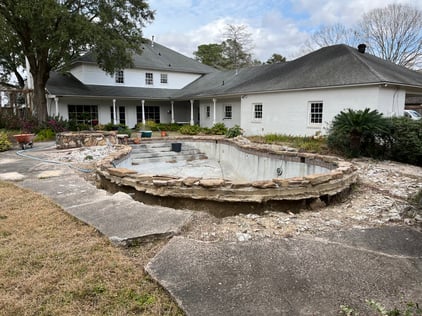
Pool popping occurs when groundwater pressure beneath the pool becomes stronger than the weight holding the shell in place.
Normally, the water inside a pool acts as a counterweight, helping keep the structure anchored in the ground. When a pool is drained for repairs, resurfacing, or maintenance, that weight disappears.
If hydrostatic pressure builds beneath the shell, the pool can literally rise out of the ground. Pool popping is one of the most catastrophic failures a pool can experience.
Potential damage may include:
-
Cracked or fractured gunite shell
-
Broken plumbing lines at the floor or walls
-
Structural misalignment that affects equipment function and water level
Repairing a pool that has popped is a major, expensive undertaking, and in severe cases, the pool may need to be demolished and rebuilt entirely.
How Do Gunite Pool Builders Protect Pools From Hydrostatic Pressure in South Louisiana?
Hydrostatic Relief Plugs
One of the most important safeguards in South Louisiana pool construction is the installation of hydrostatic relief plugs.
These plugs are installed in the floor of the pool shell and provide a controlled pathway for groundwater pressure to escape when necessary.
Rather than allowing pressure to push upward on the shell, water can enter the pool when the plug is removed, thereby equalizing the pressure.
Not every builder includes these as standard practice, particularly on lower-budget builds. In South Louisiana, that's a meaningful gap. We install hydrostatic relief plugs on every pool we build because in this environment, it's simply the right way to do the job.
Proper Dewatering During Construction
Groundwater management begins long before gunite is applied.
When excavation reaches saturated soil, builders often use dewatering systems to actively pump groundwater from the construction area. This process stabilizes the excavation and creates suitable conditions for construction.
Without proper dewatering:
-
Soil can become unstable
-
Gunite placement may be compromised
-
Structural integrity can suffer from day one
Temporary pumps and drainage systems may remain in place until the shell has been properly installed and cured.
Strategic Drainage Planning
Surface water management is just as important as groundwater management.
A properly designed pool should direct water away from the pool shell and surrounding structures. Drainage features may include:
-
Yard grading adjustments
-
French drains
-
Catch basins
-
Deck drainage systems
-
Downspout management
Managing both surface water and groundwater helps reduce long-term hydrostatic pressure around the pool.
Frequently Asked Questions About Pool Construction in a High Water Table
Can I still build a pool if my yard has a high water table?
Yes. A high water table doesn't disqualify a site from pool construction. It does mean your builder needs to account for it through proper site preparation, dewatering during the build, and the installation of hydrostatic plugs. Most lots in the greater Baton Rouge area are buildable with the right approach.
Does a high water table make my pool more expensive to build?
It can, depending on what the site requires. More involved dewatering, additional site preparation, or specific drainage measures all carry costs. But building a pool correctly from the start is almost always less expensive than repairing one that wasn't. In South Louisiana's conditions, cutting corners on groundwater management is one of the fastest ways to end up with a serious problem down the road.
What should I do if my existing pool needs to be drained for repairs or replastering?
Don’t drain your pool without coordinating with a knowledgeable service provider who understands your site. Draining a pool quickly without proper precautions or after heavy rainfall significantly increases hydrostatic pressure. A professional will help you identify the right window and take precautions to protect the shell.
Why Does Local Experience Matter When Building a Gunite Pool in Baton Rouge?
A pool in Baton Rouge isn't just a luxury. It's an investment in your home, your family, and your outdoor lifestyle.
But building a pool in South Louisiana requires more than beautiful design. It requires a deep understanding of the conditions beneath your backyard.
At Lucas Firmin Pools, we've spent more than 20 years building custom gunite pools throughout Baton Rouge and the surrounding communities. We understand local soil conditions, groundwater behavior, and the construction techniques necessary to build pools designed to last for decades.
If you're considering building a pool, let's start with your property. Our team can evaluate your site, discuss your vision, and guide you through a construction process built on experience, quality, and long-term performance.
Contact Lucas Firmin Pools today to schedule a consultation and discover what it takes to build a pool that's engineered for South Louisiana from the ground up.
